Modern Custom Range Hood Styles: A Photo Guide
If you are planning a kitchen around a custom metal hood, the hardest part is usually naming the look you want. Designers and homeowners send us inspiration photos, and the same handful of styles come up again and again. This guide walks through the styles we fabricate most in our Reno shop, with real photos of our work, so you can point at one and say, that one, in that finish.
Modern: Clean Planes, Crisp Taper, No Ornament
The modern custom range hood is defined by what it leaves out. Flat faces, a clean taper from the range width up to the ceiling, tight seams, and no trim bands or corbels. The metal itself is the design. This style shows every flaw in cheap material, which is why we form these hoods from heavier gauge steel that keeps large flat faces from oil-canning, the wavy distortion you see on thin builder-grade hoods.
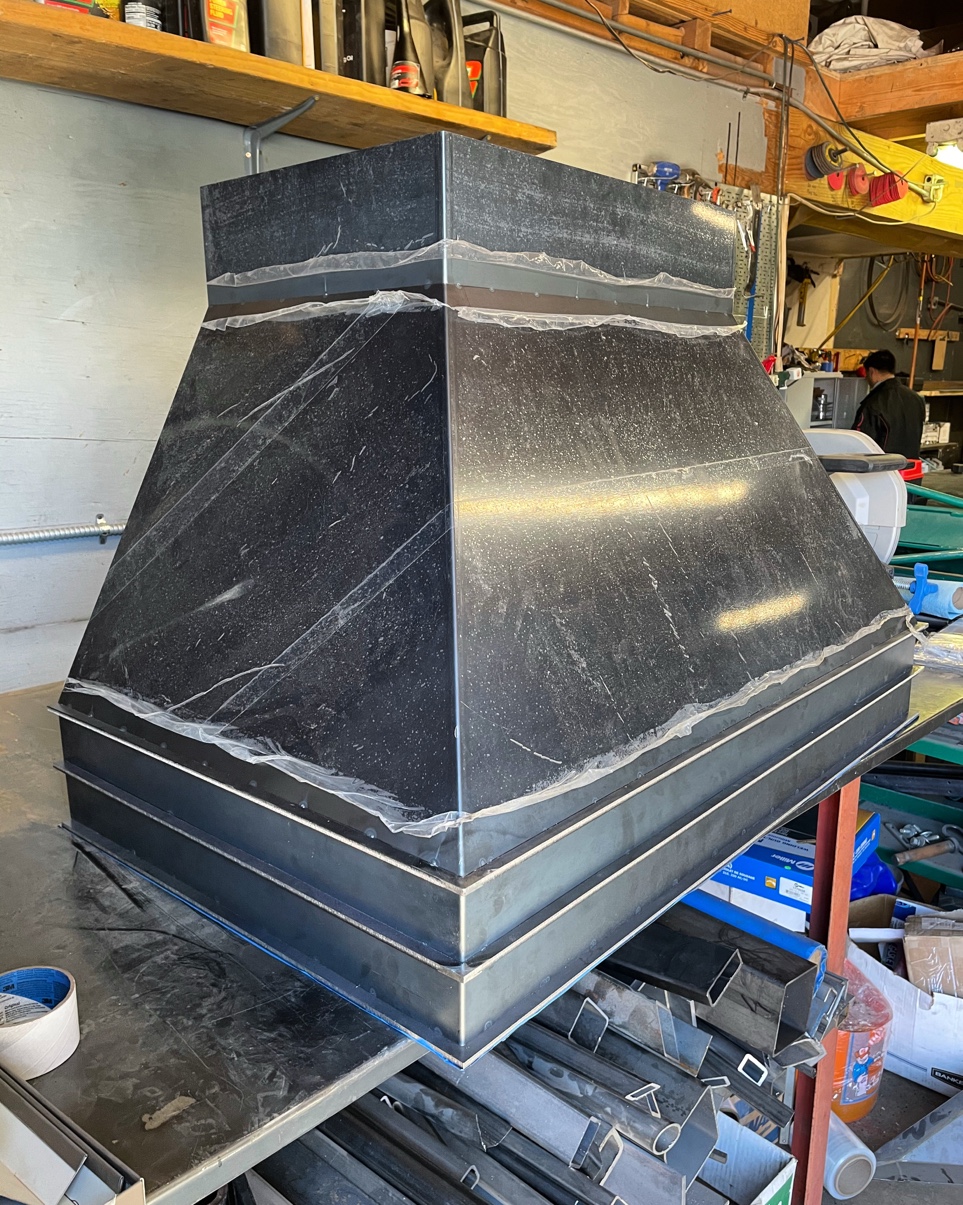
Modern hoods pair naturally with matte black and blackened steel finishes, and they work in mountain-modern homes around Truckee and Lake Tahoe as well as remodels in Reno and Sparks. If your inspiration photo is a dark, sharp-edged wedge over a big range, this is the style.
Transitional: Softer Lines, Simple Details
Transitional hoods sit between modern and traditional. The overall shape is still a tapered chase, but the details soften: a gentle curve at the bottom edge, a simple band where the hood meets the ceiling, or a strap detail across the face. It is the most forgiving style to design around because it does not fight the rest of the kitchen. Painted cabinets, stone counters, brass or nickel hardware, a transitional hood ties into all of it.
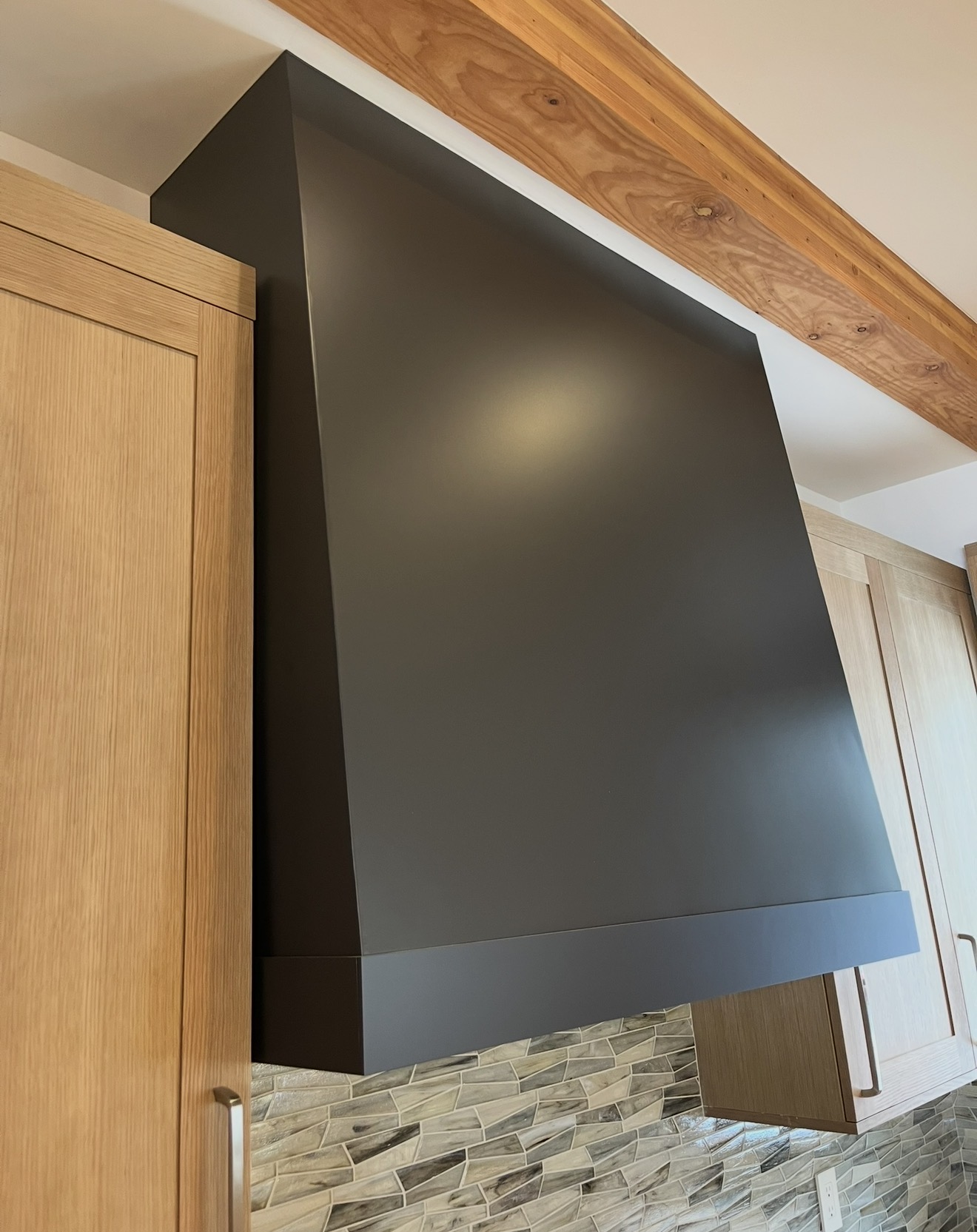
Because the details are simple, finish choice does most of the talking on a transitional hood. Zinc and light patina finishes are popular here, along with matte black for contrast against white cabinetry.
Riveted Old-World: Visible Seams and Exposed Rivets
The riveted style borrows from old copper cookware and industrial sheet metal work. Corners are joined with exposed rivets, seams are part of the design rather than hidden, and the hood reads as a crafted piece of metalwork instead of an appliance. Spacing rivets evenly along a tapered seam takes real patience at the bench, and that handwork is exactly what people respond to.
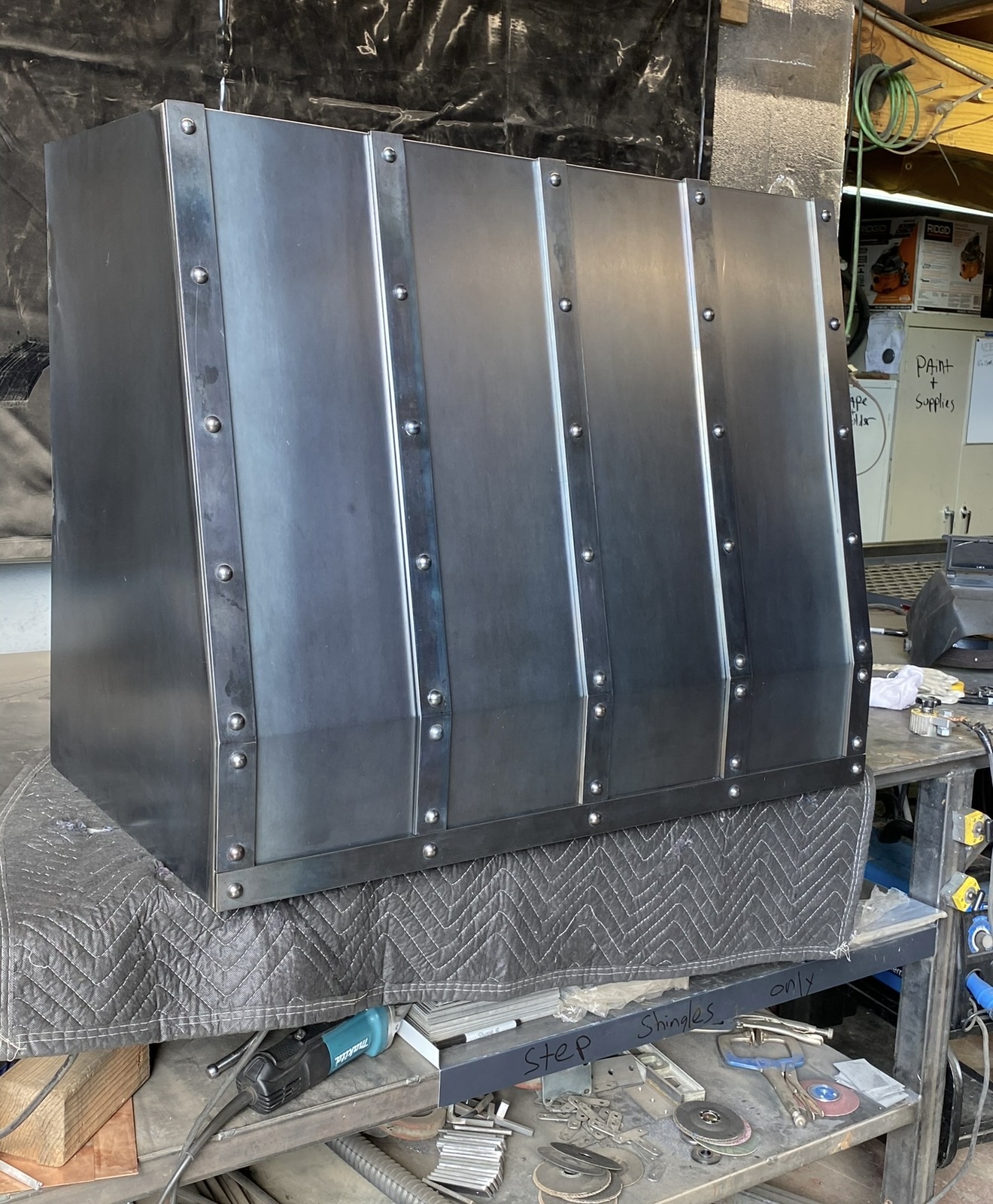
We built a hood in this style for a custom home in Martis Camp. You can read the full story in our Martis Camp custom steel kitchen hood project story, from panel layout through the riveted seams and final fit.
Finishes: Blackened Steel, Matte Black, Copper, and Zinc
Blackened steel is a hand-applied chemical darkening sealed with a clear matte coat. It gives the steel depth and variation, so the surface shifts slightly with the light instead of reading as a flat painted panel. It hides fingerprints well and suits both modern and riveted styles.
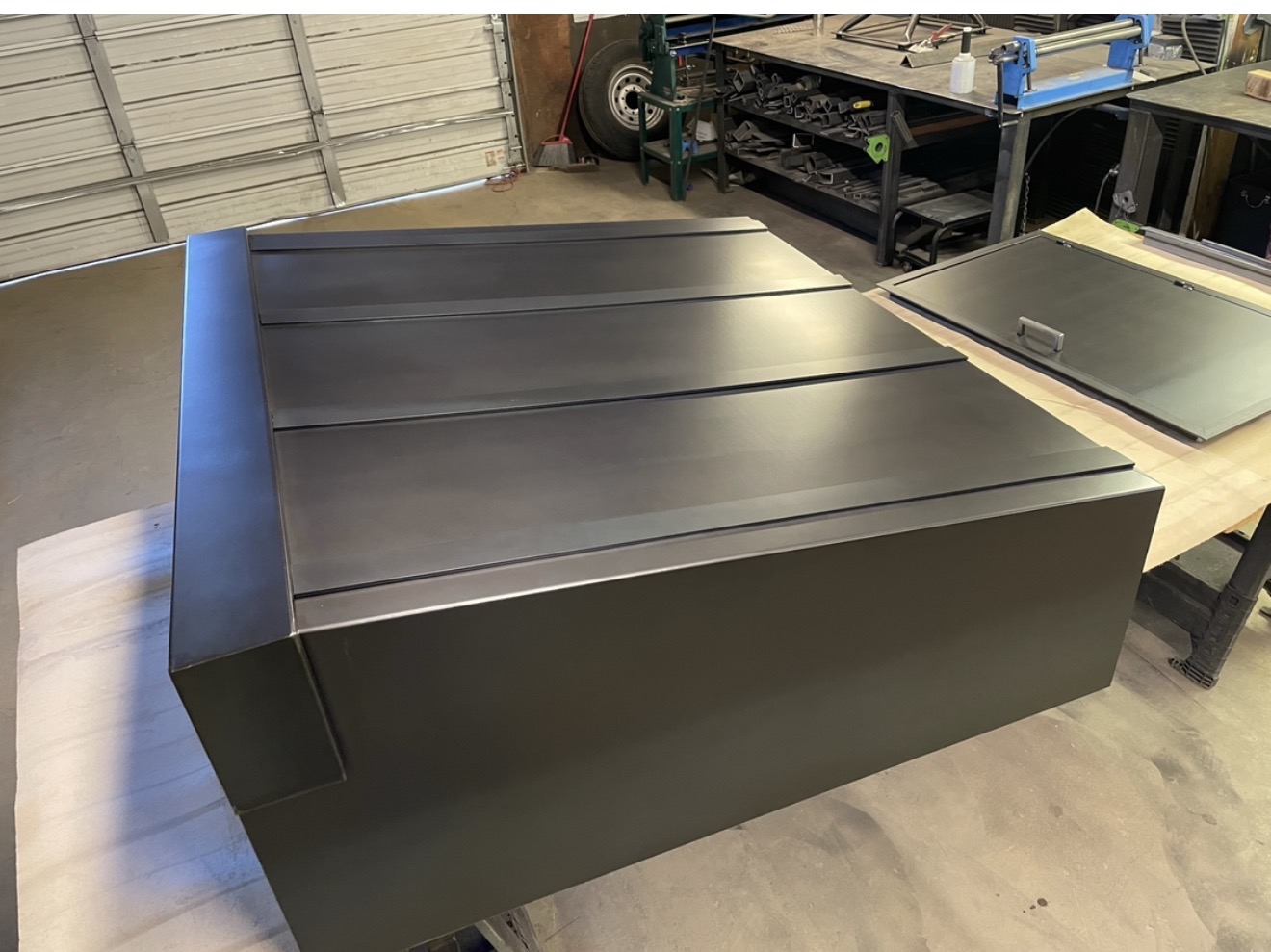
Matte black paint is the most uniform of the dark finishes. If you want every face the exact same color with no variation, a sprayed matte black over properly prepped steel is the answer, and it is the easiest finish to match to black windows and fixtures.
Copper starts bright and warms into a deeper brown patina over time, or it can be pre-patinated and sealed if you want the aged look from day one. Copper suits transitional and old-world styles and is a natural pairing with the riveted look.
Zinc has a soft blue-gray tone that lands between stainless and blackened steel. It develops a subtle matte patina and reads quieter than copper, which makes it a favorite for lighter, brighter kitchens.
How a Custom Hood Comes Together
Every hood starts as flat sheet in our shop. We work from your framing dimensions and the ventilation contractor's liner specs, produce shop drawings for approval, then cut, form, and seam each face on the bench before finishing.
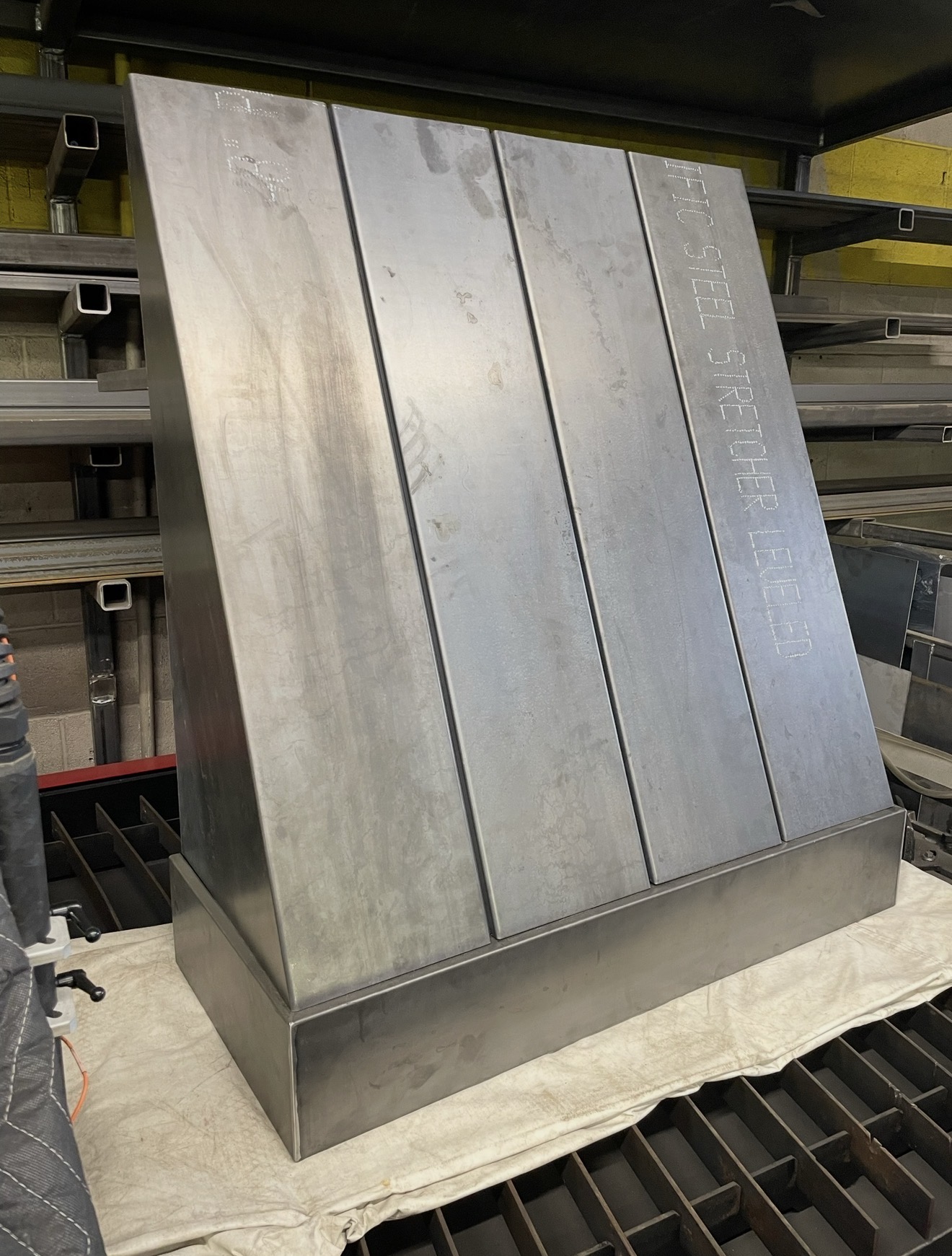
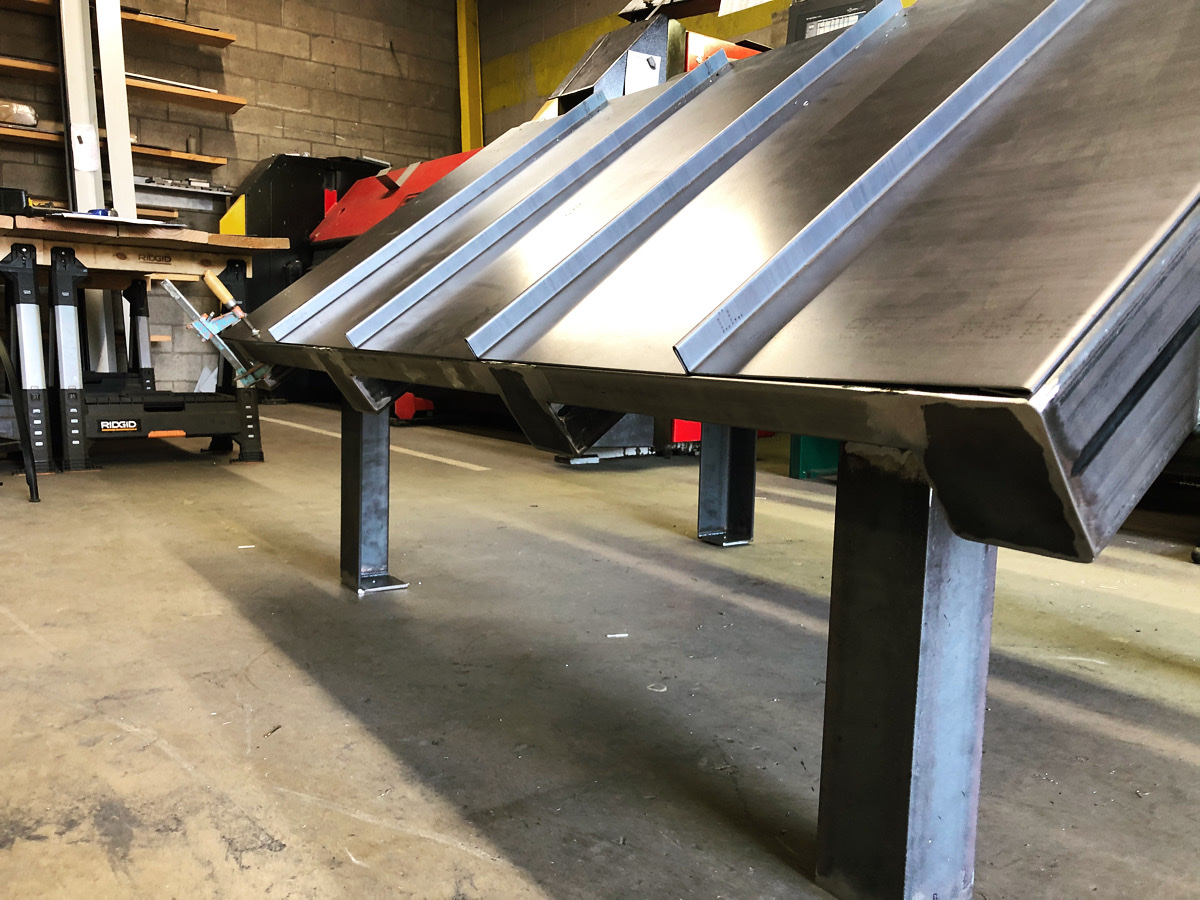
The hood ships as a finished shell, ready for your ventilation contractor's liner and blower. For details on materials, gauges, and how to start a hood project, see our custom kitchen hoods service page.
Frequently Asked Questions
What metal is best for a modern range hood?
For dark modern hoods, blackened or matte black steel in a heavier gauge is the usual choice because it keeps large flat faces crisp. Zinc and copper are better fits when you want the finish to develop character over time.
Can you match a hood to a photo from a design site?
Yes. Inspiration photos are how most hood projects start. We translate the photo into shop drawings with your actual range width, ceiling height, and chase dimensions, and you approve the drawings before we cut metal.
Does the hood include the fan and liner?
No. We fabricate the decorative shell to fit the liner and blower specified by your ventilation contractor, which keeps the mechanical side with the trade that handles it.
How long does a custom hood take?
Most hoods run a few weeks from approved shop drawings, depending on finish and shop schedule. Patinated finishes like copper and zinc can add time. Ask when you request a quote and we will give you a current lead time.
Ready to talk through a style? Visit the custom kitchen hoods page or send us your inspiration photos with a quote request and we will take it from there.